

What’s in This Guide
- Start With How the Building Is Used
- Plan the Schedule Around Business Disruption
- How to Plan a Commercial Repainting Project
- Older Buildings May Require Additional Lead-Safe Planning
- Durability Depends on Preparation and Environment
- Frequently Asked Questions
- Plan the Project Before the First Coat
Commercial repainting is not just a color decision. For offices, retail spaces, restaurants, apartment common areas, and other occupied properties, the project affects access, operations, indoor air quality, and long-term maintenance.
Property owners in West Hartford should approach commercial painting services as a planned facilities project with clear scope, scheduling, and performance requirements.
Quick Facts
- Plan around business hours, customer traffic, tenants, deliveries, and access before work begins.
- Match coating systems to the surface, traffic level, cleaning needs, moisture exposure, and existing paint condition.
- Treat surface preparation as part of the coating system, not a separate cosmetic step.
- In occupied buildings, coordinate ventilation, containment, signage, and work zones to reduce disruption.
- Confirm responsibilities, sequencing, touch-up standards, and final inspection procedures before the first day on site.
Start With How the Building Is Used
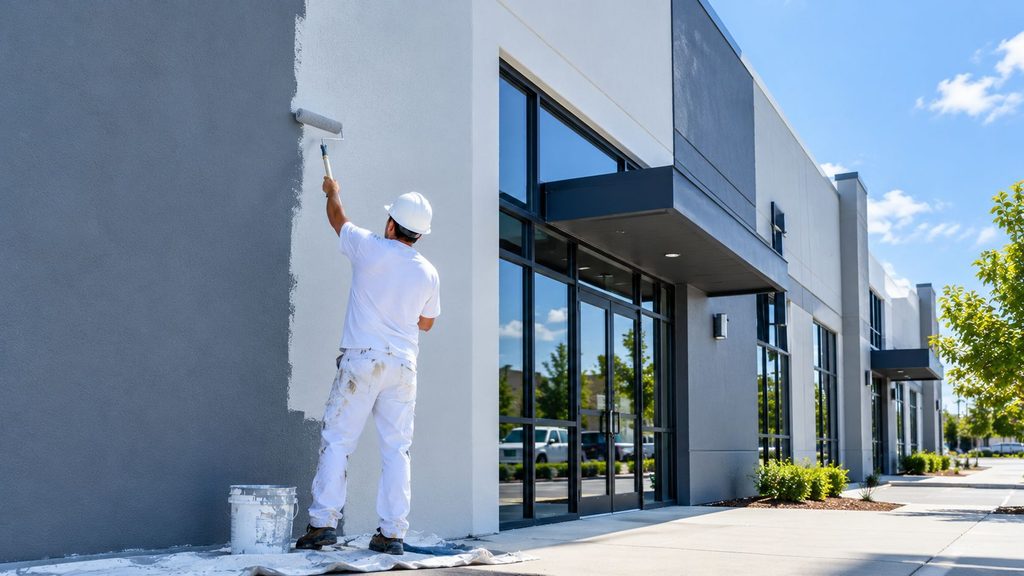
A durable paint specification begins with use conditions. A quiet private office has different demands than a lobby, hallway, restroom, stockroom, or customer-facing retail area.
Before requesting estimates, identify:
- High-touch or high-traffic walls
- Surfaces exposed to moisture, grease, or frequent cleaning
- Areas where furniture, shelving, equipment, or signage limits access
- Spaces that must remain open during normal business hours
- Damaged drywall, peeling coatings, stains, cracks, or other prep needs
Commercial painters can then recommend products and preparation methods that fit those conditions instead of treating every room the same.
Plan the Schedule Around Business Disruption
Commercial painting contractors need more than a start date. They need to understand when people use each area, which entrances must remain clear, and what activities cannot overlap with painting.
For an occupied property, a phased schedule may work better than closing a large area at once. Crews can move through offices, corridors, suites, or common areas in planned zones. Off-hours or lower-traffic work may also reduce interference, depending on the property and contractor availability.
The schedule should account for setup, surface preparation, drying and recoat requirements, cleanup, and reopening each area. Product labels and manufacturer instructions should guide dry and recoat times rather than assumptions.
How to Plan a Commercial Repainting Project
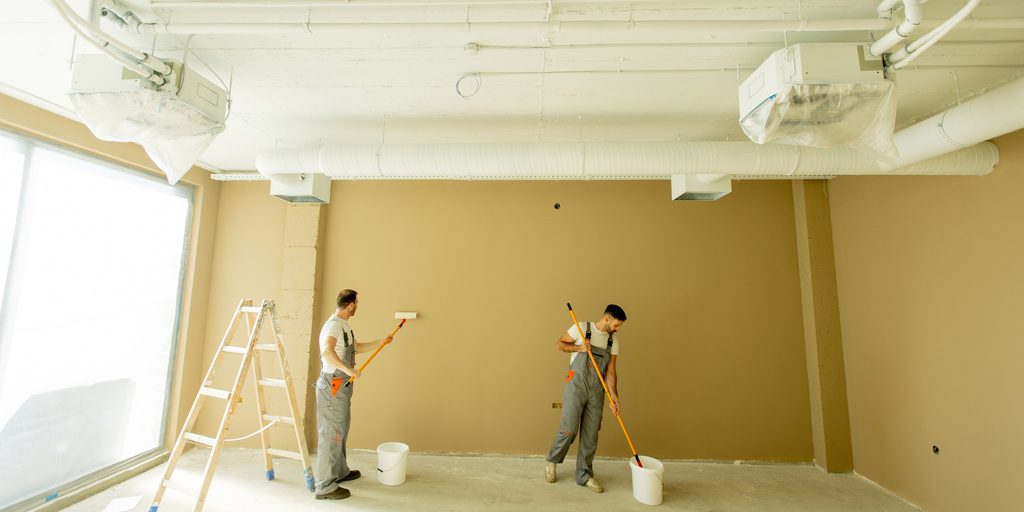
1. Define the Scope by Area and Surface
List walls, ceilings, trim, doors, drywall repairs, and other surfaces included in the project. Note exclusions so estimates are easier to compare.
2. Inspect Existing Conditions
Look for adhesion failure, moisture staining, cracks, damaged drywall, chalking, or contamination. AMPP guidance notes that coating performance depends heavily on proper surface preparation, making prep a core durability issue rather than a cosmetic extra.
3. Set Operational Constraints
Document work hours, restricted areas, tenant requirements, loading access, noise limits, and cleanup expectations.
4. Choose Finishes Based on Use
Higher-contact areas may need finishes selected for washability and repeated cleaning. Lower-traffic spaces may prioritize appearance and glare control. A commercial interior painting contractor should match the coating to the substrate and service environment.
5. Create an Occupied-Space Plan
The U.S. Environmental Protection Agency notes that paints and other products can emit volatile organic compounds. EPA reports that concentrations of many VOCs are consistently higher indoors, sometimes up to 10 times higher than outdoors. For occupied interiors, discuss ventilation, isolation of work areas, product selection, and when spaces can return to normal use.
6. Confirm Closeout Standards
Agree on punch-list procedures, touch-ups, debris removal, leftover paint labeling if applicable, and the final walkthrough.
Older Buildings May Require Additional Lead-Safe Planning
If work will disturb painted surfaces in a pre-1978 property, lead-related requirements may apply. EPA’s Renovation, Repair, and Painting Rule applies to certain work that disturbs paint in pre-1978 housing and child-occupied facilities, with certification and lead-safe work practice requirements.
Property owners should identify the building age and occupancy type early and ask contractors how any applicable requirements affect preparation, containment, and cleanup. Do not assume standard sanding or scraping procedures are appropriate for every older property.
Durability Depends on Preparation and Environment
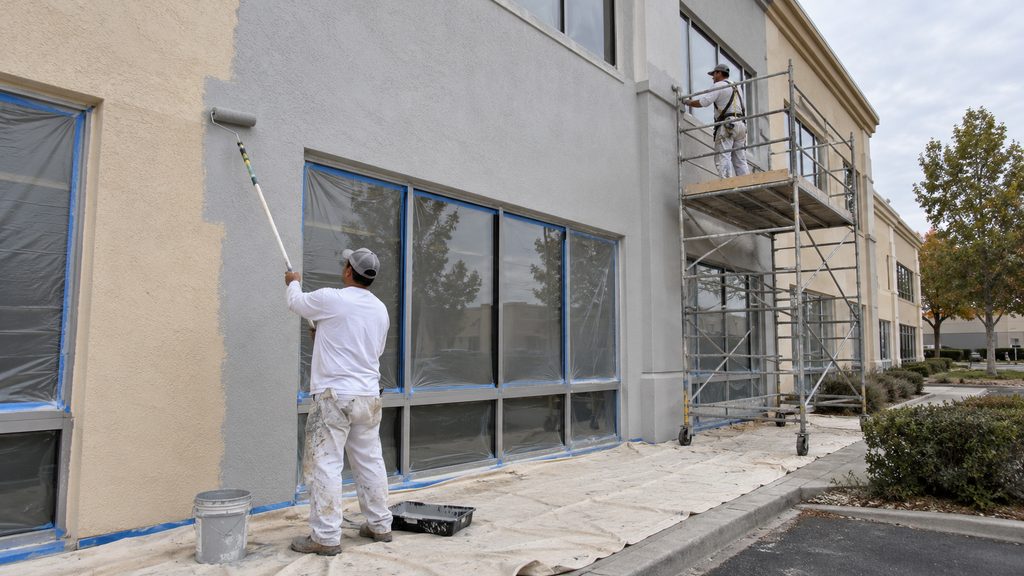
Premature coating failure often starts below the finish coat. Dirt, loose paint, glossy surfaces, moisture problems, or unrepaired substrate defects can interfere with adhesion.
A professional scope should state what preparation is included, not simply how many coats will be applied. The right process may involve cleaning, scraping, sanding, patching, caulking, priming, or other substrate-specific steps.
Exterior commercial work also depends on weather. Temperature, moisture, direct sun, and precipitation can affect application and curing, so commercial painting services in West Hartford should be scheduled around both operating needs and manufacturer application conditions.
Frequently Asked Questions
How often should a commercial property in West Hartford be repainted?
There is no fixed repainting schedule. Traffic levels, exposure, surface condition, cleaning frequency, and the type of coating all affect how soon a property may need another repaint.
Can commercial painters match an existing paint color?
Commercial painters can often work from an existing color, paint code, or physical sample. An exact match may be more difficult when the original coating has faded, aged, or changed over time.
Can different colors be used in tenant spaces and common areas?
Yes. Commercial painting services can accommodate different color schemes across offices, tenant areas, corridors, lobbies, and other spaces when the project scope clearly identifies where each color belongs.
Should West Hartford property owners provide brand colors before painting begins?
If a business or property follows established brand standards, providing approved color names, codes, or specifications can help commercial painting contractors understand the intended finish before work begins.
What paint information should property owners keep after a commercial repaint?
Keep basic records of the paint manufacturer, product line, color name or code, sheen, and the areas where each coating was used. This information can make future maintenance and touch-ups easier.
Plan the Project Before the First Coat
A successful commercial repaint starts with a clear operating plan. West Hartford property owners should define the scope, document surface conditions, plan around occupants, select coatings for real use conditions, and confirm how the contractor will manage preparation and closeout.
West Hartford House Painting Experts provides commercial painting services for local property owners and managers. If you are planning a repaint, request a project discussion focused on your building’s surfaces, occupancy, scheduling needs, and maintenance priorities.