

Painting vinyl siding on house exteriors is absolutely possible, and when done correctly, it can add years of life and a fresh look to your home. The key is using the right paint, preparing the surface thoroughly, and understanding the limitations of vinyl as a substrate.
Table of Contents
- Why So Many Homes Have Vinyl Siding
- Can You Paint Vinyl Siding Successfully
- How to Prep Vinyl Siding for Painting
- Choosing the Right Paint and Color
- What It Costs to Paint Vinyl Siding
- Important Things to Know About Painting Vinyl Siding
Key Takeaways
- Vinyl siding can be painted successfully, but surface prep and paint selection are critical.
- Use 100% acrylic latex paint formulated for vinyl to avoid peeling and heat warping.
- Stick to colors that are the same shade or lighter than your existing siding color.
- The average cost to paint vinyl siding ranges from $300 to $10,000, with most projects averaging around $4,000 (HomeAdvisor, 2025).
- Timing matters: mild temperatures and low humidity produce the best results.
- Hiring a licensed, insured contractor reduces the risk of costly mistakes on this surface.
Why So Many Homes Have Vinyl Siding
Vinyl siding is everywhere across American neighborhoods, and the numbers back that up. According to the U.S. Census Bureau’s Survey of Construction, 26% of homes started in 2024 had vinyl siding as their principal exterior wall material. Global Market Insights reported in 2025 that vinyl made up 54% of the entire siding market in 2024, reflecting how deeply embedded this material is in residential construction.
For homeowners, that widespread adoption also means a common challenge: vinyl fades, discolors, and starts to look dated over time. Rather than replacing it outright, which can run into the tens of thousands of dollars, many homeowners turn to paint as a more budget-friendly refresh. Additionally, understanding how much does house painting cost is an important first step in planning your project.

Can You Paint Vinyl Siding Successfully
Yes, you can paint vinyl siding, but it behaves differently from wood or fiber cement. Vinyl expands and contracts significantly with temperature changes. Therefore, a paint that lacks flexibility will crack and peel within a season or two. It also has a relatively smooth, slightly waxy surface that resists adhesion if not properly cleaned and primed.
The good news is that paint technology has caught up with these challenges. Modern acrylic latex paints designed specifically for vinyl bond well, flex with the material, and hold up to UV exposure. Moreover, knowing the best time of year to paint house exterior also plays a big role in how well the paint adheres and cures.
One limitation worth understanding upfront: you generally cannot paint vinyl siding a significantly darker color than its current shade. Darker colors absorb more heat, which can cause vinyl panels to warp or buckle. Most reputable paint manufacturers and contractors recommend matching or going slightly lighter than the existing color.
How to Prep Vinyl Siding for Painting
Preparation is where most DIY paint jobs fail. Vinyl siding collects mold, mildew, chalk residue, and airborne grease over the years. Any of those contaminants left on the surface will prevent the paint from bonding properly.
Here is the general prep sequence professionals follow:
- Wash the entire surface using a pressure washer or garden hose with a vinyl-safe cleaning solution. Allow it to dry completely, which can take 24 to 48 hours depending on conditions.
- Inspect for damage. Cracked, warped, or loose panels should be repaired or replaced before painting. Paint will not hide structural problems.
- Caulk gaps and seams around windows, doors, and trim with a paintable, flexible caulk rated for exterior use.
- Spot-prime any bare areas where old paint has peeled or where repairs were made.
- Mask off windows, doors, trim, and fixtures to keep lines clean and professional-looking.
A thorough understanding of how to prepare walls for painting applies here too. The same principles of cleaning, repairing, and priming carry over from interior work to exterior vinyl surfaces.
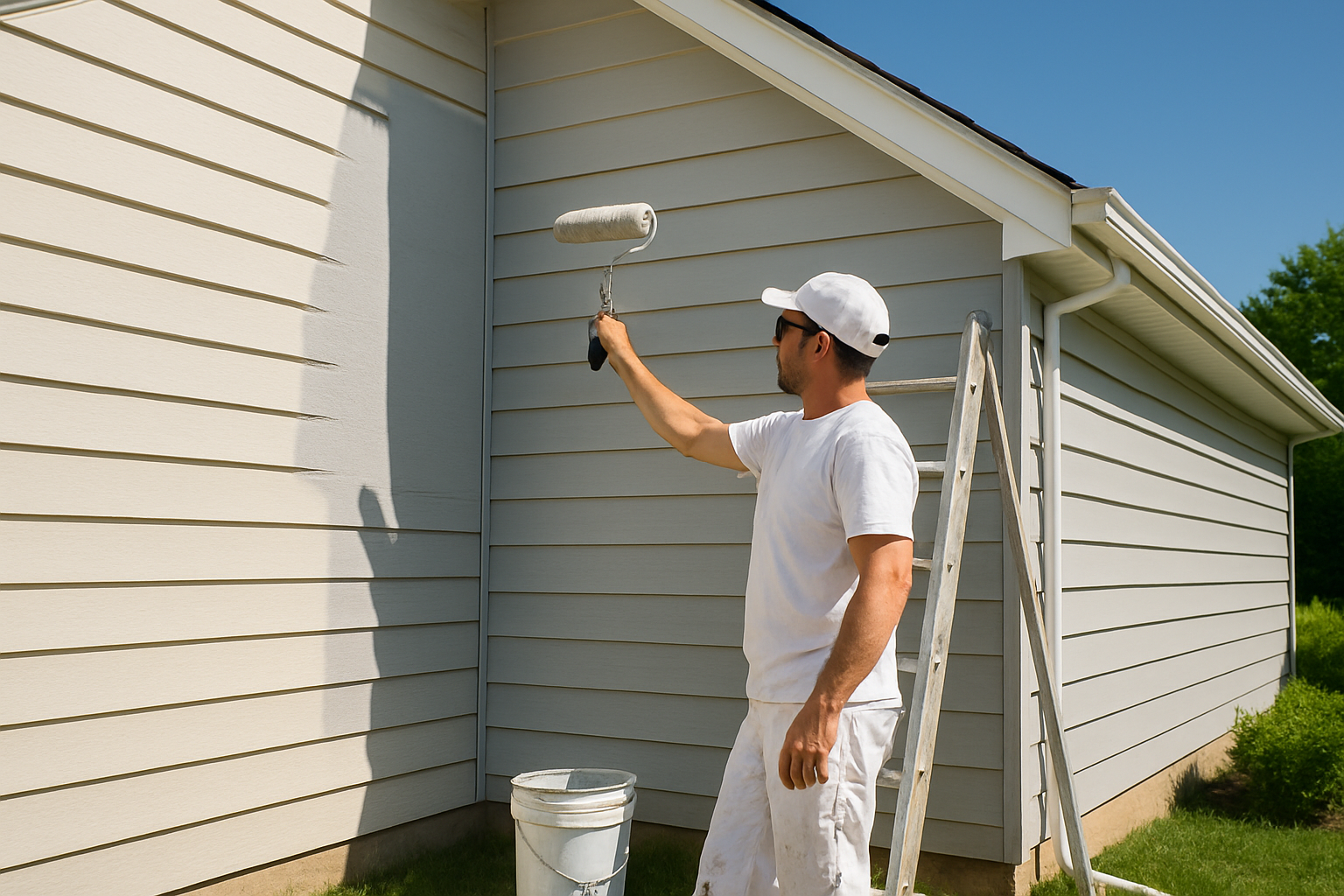
Choosing the Right Paint and Color
Not all exterior paints are formulated for vinyl. Look for 100% acrylic latex paint that is specifically labeled for vinyl or flexible substrates. These formulas contain additives that allow the paint film to move with the siding rather than fight against it.
Color selection deserves careful thought. According to The Harris Poll’s third annual national survey conducted on behalf of Alside (2024), off-white and cream tones were the most popular siding color choice at 18% of respondents. Furthermore, 42% of American homeowners said they would choose a timeless, neutral look for their exterior home color. If you are unsure where to start, neutral shades are a safe and broadly appealing direction.
Sheen level also matters significantly. A flat or low-sheen finish tends to work best on vinyl because it minimizes the visibility of surface imperfections. High-gloss finishes highlight every dent, ripple, and panel seam.
What It Costs to Paint Vinyl Siding
Costs vary widely depending on the size of the home, the condition of the siding, the number of coats needed, and your geographic location. According to HomeAdvisor (2025), the average cost to paint vinyl siding ranges from $300 to $10,000, with most projects averaging around $4,000. On a per-square-foot basis, that typically works out to $1 to $3 per square foot.
For larger or more complex projects, costs climb further. Among homeowners who spent at least $5,000 on home improvement projects in the past 12 months, the median spend on exterior paints and stains was $8,000. The average reached just under $12,000, according to the Home Improvement Research Institute (2025).
To put your project in context alongside other exterior and interior work, it helps to compare various painting scenarios in price. For interior work happening at the same time, an interior painting cost estimate calculator can help you budget the full scope before calling a contractor.
| Project Size | Estimated Cost Range |
|---|---|
| Small home (under 1,200 sq ft) | $300 to $1,800 |
| Mid-size home (1,200 to 2,000 sq ft) | $1,800 to $4,500 |
| Large home (2,000 to 3,500 sq ft) | $4,500 to $8,000 |
| Very large or complex home | $8,000 to $10,000+ |
Estimates based on HomeAdvisor national data, 2025. Actual costs depend on local labor rates, siding condition, and prep requirements.
Important Things to Know About Painting Vinyl Siding
- Vinyl siding painted a darker color than its original shade risks heat-related warping, especially in climates with intense summer sun.
- Most paint manufacturers recommend a minimum outdoor temperature of 50°F during application and for several hours after to ensure proper curing.
- In addition, a quality exterior paint job on vinyl siding should last 8 to 10 years with proper prep. However, touch-ups may be needed sooner in harsh climates.
- Some vinyl siding warranties are voided if the siding is painted. Therefore, it is worth checking the manufacturer’s documentation before starting.
- Spraying is the most efficient application method for large vinyl surfaces. Nevertheless, back-rolling immediately after helps ensure full adhesion.
Take the Next Step With West Hartford House Painting Experts
If you are ready to move forward with painting vinyl siding on house exteriors in the West Hartford area, our team at West Hartford House Painting Experts is here to help. We are licensed, insured, and bonded, and we serve West Hartford, Bloomfield, Newington, Farmington, Avon, Windsor, East Hartford, Glastonbury, Manchester, Wethersfield, and the broader Hartford County region.
Request your free estimate today and find out exactly what your project will cost before any work begins. Reach out now to schedule a no-obligation consultation with our exterior painting specialists.
Frequently Asked Questions
Q: How long does paint last on vinyl siding?
With proper surface prep and quality acrylic latex paint, you can expect 8 to 10 years of durability. That timeline can shorten in regions with extreme heat, cold, or moisture. Choosing a paint formulated specifically for vinyl is the single biggest factor in longevity.
Q: Do I need to prime vinyl siding before painting?
A dedicated primer is not always required, but it significantly improves adhesion, especially over faded or previously painted surfaces. Many contractors use a self-priming paint on vinyl in good condition. For heavily weathered or bare sections, a separate primer pass is the safer approach.
Q: Can I use a paint sprayer on vinyl siding?
Yes, and most professionals prefer it for speed and even coverage on large surfaces. The key is to back-roll or brush immediately after spraying to work the paint into the surface. Spraying alone without back-rolling can lead to poor adhesion on smooth vinyl panels.
Q: Will painting vinyl siding increase my home’s value?
Fresh exterior paint generally improves curb appeal and can positively influence a home’s market value. While specific return-on-investment figures vary by market, a clean, well-maintained exterior signals upkeep to buyers and appraisers alike.
Q: What happens if I paint vinyl siding a darker color?
Darker colors absorb more heat, which can cause vinyl panels to warp or buckle over time. Most contractors and paint manufacturers advise matching or going lighter than the existing siding color. If you want a darker shade, consult with a professional before committing to a color.
The Bottom Line on Painting Vinyl Siding on House Exteriors
Painting vinyl siding on house exteriors is a cost-effective way to modernize your home’s appearance without the expense of full siding replacement. The project requires the right materials, careful prep, and attention to color selection to get results that hold up season after season.
If you are weighing your options in the West Hartford area, reach out to West Hartford House Painting Experts for an honest assessment of your siding’s condition and a clear project estimate.