
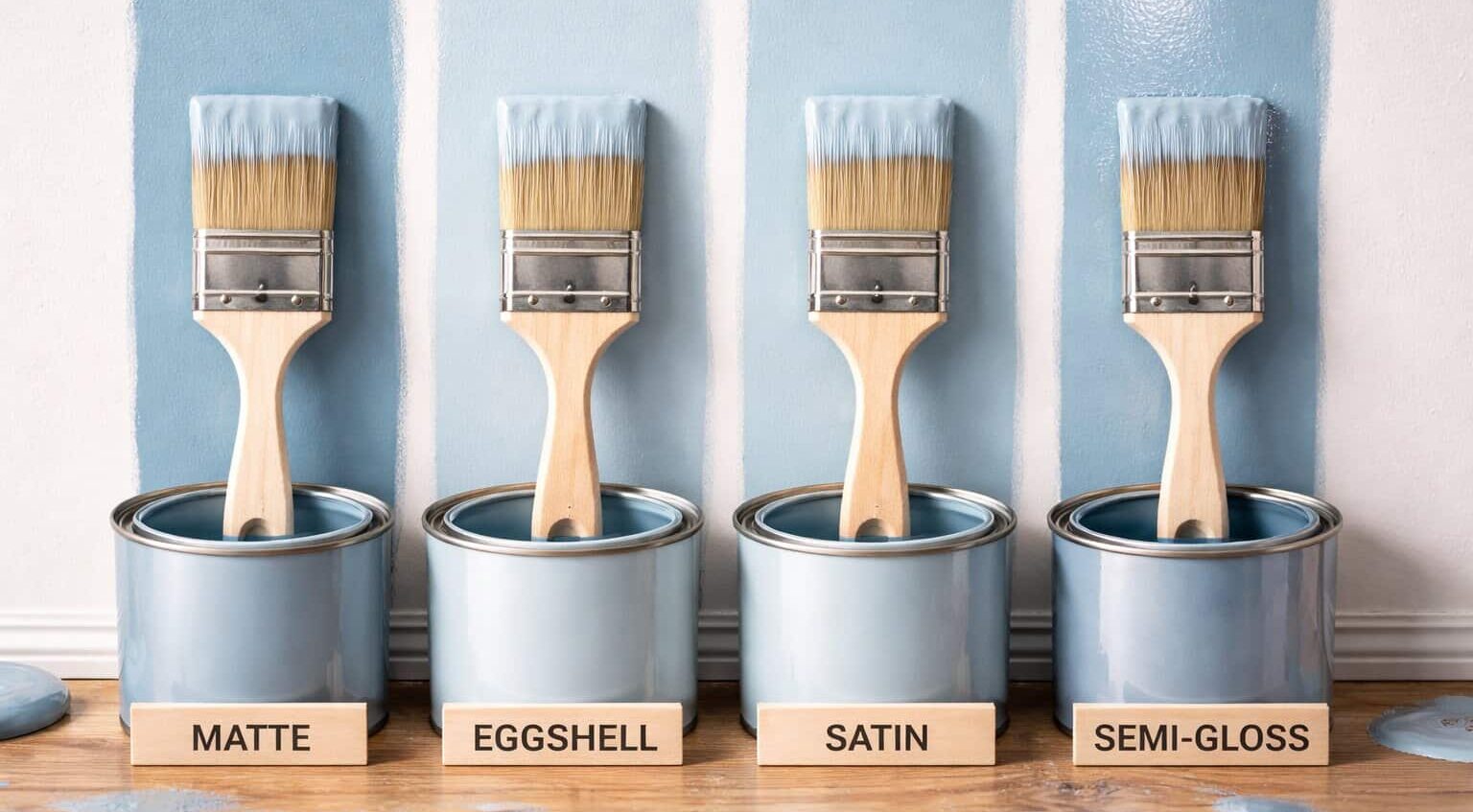
✔ Best for hiding surface flaws
✔ Ideal for ceilings and low-traffic rooms
✔ Least washable
✔ Most versatile interior wall finish
✔ Moderate durability
✔ Subtle sheen for living areas
✔ More durable and moisture-resistant
✔ Good for kitchens, bathrooms, hallways
✔ Requires smoother wall prep
✔ Most washable and durable
✔ Best for trim, doors, cabinets
✔ Highlights imperfections
Most homeowners focus on color first. Professionals know the finish often matters more.
Paint finish determines how durable your walls will be, how easily they clean, how much light they reflect, and how visible surface flaws become. In simple terms:
Higher-gloss paints contain more resin, which increases durability and washability, according to the Paint Quality Institute. The tradeoff is that the added sheen reflects more light and highlights surface imperfections.
Understanding this relationship between sheen and performance is the key to choosing the best paint finish for your home.
A paint finish refers to the level of sheen or gloss in the dried coating. Sheen measures how much light reflects off a painted surface.
Finishes generally move up this scale:
As sheen increases, durability and cleanability typically increase as well. This is because higher-gloss paints contain more binders and resins. Those ingredients create a tighter surface film, making the finish more resistant to stains and moisture.
However, increased reflectivity also means wall imperfections such as dents, patches, and uneven drywall become more noticeable. That balance between durability and appearance drives most finish decisions.
Matte, sometimes labeled flat, has the lowest sheen level. It absorbs light rather than reflecting it, creating a soft, modern appearance.
Matte paint is often chosen for older homes where walls are not perfectly smooth.
The Environmental Protection Agency emphasizes that smooth, cleanable surfaces are important in moisture-prone spaces to reduce mold and allow proper cleaning. Matte paint is not ideal for kitchens or bathrooms for this reason.
Eggshell has a slight, subtle sheen similar to the surface of an eggshell. It reflects more light than matte but still maintains a soft appearance.
Many homeowners choose eggshell because it strikes a practical balance. It offers a refined appearance without sacrificing too much durability. For general interior walls, eggshell remains one of the most popular finishes.
Satin has a noticeable, smooth sheen. It reflects light more clearly than eggshell and creates a slightly polished look.
According to guidance from the Centers for Disease Control and Prevention, cleanable surfaces are essential in frequently used areas. Satin’s tighter film makes routine cleaning more effective compared to lower-sheen finishes.
If you are deciding between eggshell vs satin paint for a busy home, satin often performs better over time.
Semi-gloss has a high sheen and strong reflectivity. It creates a smooth, slick surface that resists moisture and stains.
Higher-gloss coatings are widely recommended for trim because they withstand frequent contact and cleaning better than flat finishes.
When comparing satin vs semi-gloss paint, semi-gloss provides greater durability but a more pronounced shine.
|
Finish |
Sheen Level |
Durability |
Best For |
Hides Imperfections |
|
Matte |
Very Low |
Low |
Ceilings, bedrooms |
Excellent |
|
Eggshell |
Low |
Moderate |
Living areas, offices |
Very Good |
|
Satin |
Medium |
High |
Kitchens, bathrooms, hallways |
Moderate |
|
Semi-Gloss |
High |
Very High |
Trim, doors, and moisture-prone areas |
Low |
Selecting the best paint finish involves more than aesthetics. Follow these steps:
High-traffic areas such as hallways and family rooms need durable finishes. Satin or semi-gloss performs better than matte. Low-traffic rooms allow for softer finishes.
Bathrooms, kitchens, and laundry rooms require finishes that resist moisture and allow cleaning. The EPA notes that controlling moisture is essential to prevent mold growth. Satin or semi-gloss is better suited for these conditions.
If walls have visible patches or texture inconsistencies, matte or eggshell will conceal flaws better. Satin and semi-gloss require smoother surfaces.
Rooms with abundant natural light amplify the sheen. Higher gloss levels reflect more light and make surface defects more noticeable.
If frequent cleaning is expected, avoid matte finishes. Choose a washable option that aligns with your lifestyle. Proper surface preparation also plays a critical role. Even the best paint finish will underperform if applied over poorly prepared walls.
Matching finish to function prevents premature wear and costly repainting.
For most interior walls, eggshell or satin is ideal. Eggshell works well in living rooms and bedrooms because it balances softness and durability. Satin is better for high-traffic or moisture-prone spaces like kitchens, bathrooms, and hallways due to its improved washability.
Matte or flat paint hides wall imperfections best. Its low sheen absorbs light, which minimizes the appearance of dents, patches, and uneven drywall.
Satin is typically best for bathroom walls because it resists moisture while maintaining a softer look. Semi-gloss is better for trim, cabinets, and areas that require frequent cleaning.
Yes, but it is not common for large wall surfaces. Semi-gloss reflects significant light and highlights imperfections. It is typically reserved for trim, doors, and cabinetry.
Yes. Higher sheen paints contain more binders and resins, which increase durability and cleanability. Semi-gloss is generally the most durable among standard interior finishes.
Choosing between matte, eggshell, satin, and semi-gloss comes down to function. Matte hides flaws. Eggshell balances appearance and durability. Satin stands up to moisture and traffic. Semi-gloss delivers maximum cleanability for trim and high-use areas.
The right finish protects your walls, simplifies maintenance, and improves the overall look of your home. For homeowners who want professional guidance and precise application, West Hartford House Painting Experts can help ensure the right finish is selected and applied correctly for lasting performance.