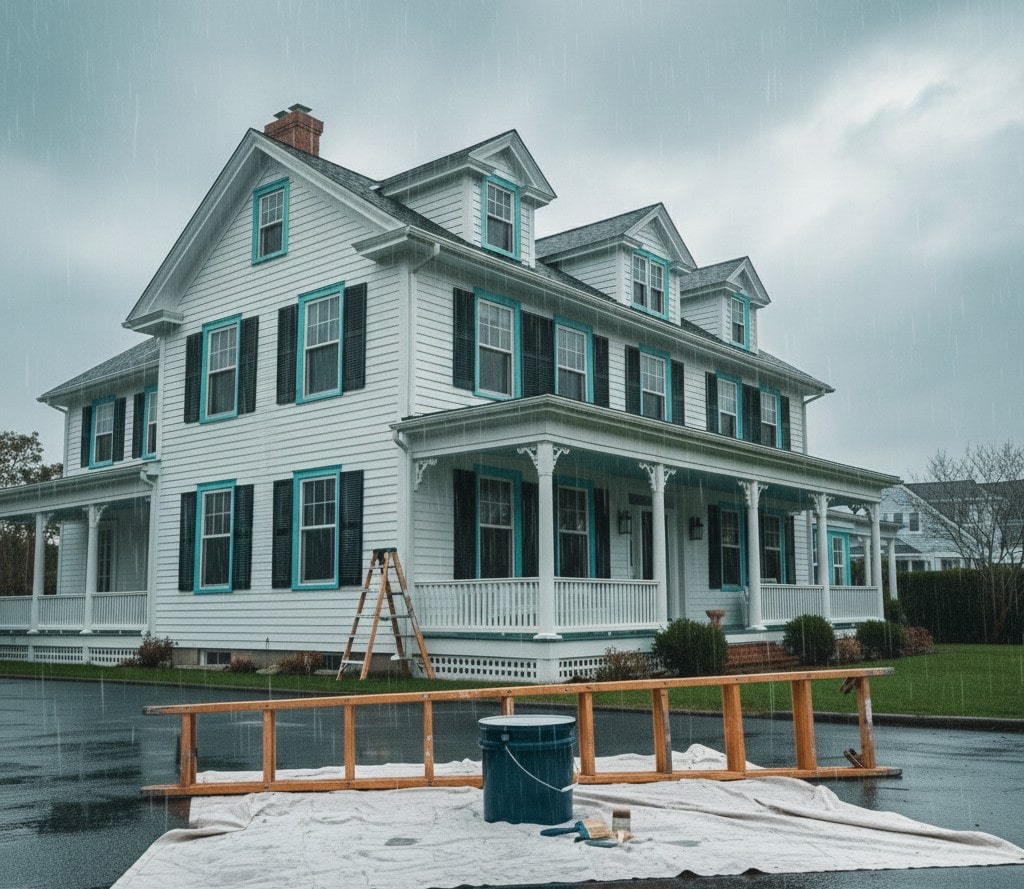
Painting at the wrong time can waste money, ruin finishes, and shorten the life of your paint job. Knowing when not to paint is just as important as knowing when to start.
You should not paint your house in extreme weather (too hot, cold, windy, or humid), when surfaces have mold or damage that needs repair first, or if it’s a fixer-upper in a fast market where buyers expect to renovate, as investing in paint might not be worthwhile. Homeowners searching for interior house painters near me often focus on colors and costs, but timing is the hidden factor that determines whether a paint job looks great for years or fails within months. In Connecticut, seasonal swings make this decision even more critical.
✔ Weather conditions directly affect paint durability and appearance
✔ Painting over mold or damage guarantees early failure
✔ Extreme heat and cold both cause adhesion problems
✔ Market conditions can make painting financially unnecessary
✔ Professional timing leads to longer-lasting results

Cold temperatures slow down paint drying and curing, preventing proper adhesion to surfaces. This often results in bubbling, cracking, or flaking once temperatures fluctuate. Nighttime temperature drops are especially problematic in Connecticut, where daytime conditions may seem acceptable, but cold evenings undo progress. Most paints specify minimum application temperatures, and ignoring them leads to premature paint failure.
Excessive heat causes paint to dry too quickly, which prevents it from bonding correctly. This rapid drying leads to blistering, peeling, and visible lap marks. Direct sunlight on siding or trim worsens the issue, making even high-quality paint perform poorly.
High humidity creates condensation on surfaces, trapping moisture under the paint film. The result is streaking, fading, bubbling, or peeling shortly after application. Rain before or after painting can completely ruin adhesion. A minimum of 24 hours of dry weather before and after painting is essential.
Wind carries dust, pollen, and debris that stick to wet paint, ruining the finish. It also causes uneven drying, leading to inconsistent texture and sheen. For best results, painting should be avoided when winds exceed 8 mph.
Painting over mold or mildew only hides the problem temporarily. Without proper treatment and removal, mold will grow back through the new paint layer. Moisture-prone areas and shaded exteriors in Connecticut are especially vulnerable. Professional remediation and mold-resistant primers are required before painting.
Paint cannot compensate for underlying damage. Cracks, peeling layers, and rotted wood must be repaired first, or the new paint will fail quickly. Structural issues allow moisture intrusion, which breaks down paint from beneath the surface.
Dirty, chalky, or glossy surfaces prevent paint from bonding properly. Skipping steps like washing, sanding, and priming dramatically shortens the lifespan of a paint job. Proper preparation is often more important than the paint itself.

In strong real estate markets, buyers often expect to renovate and prefer negotiating price rather than paying for a seller’s paint choices. Spending money on paint may not increase the home’s value and can even limit buyer appeal if colors don’t align with preferences.
If walls, layouts, or finishes will soon be replaced, painting beforehand offers little return on investment. Funds are better directed toward structural repairs or renovations that directly impact value.
Interior painting is less affected by outdoor weather, but it is not weather-proof. Extreme cold can still impact drying, while high indoor humidity leads to streaking and extended cure times. Poor ventilation traps fumes and slows the process. Professional interior house painters near me manage temperature, airflow, and humidity to ensure smooth finishes and safe conditions year-round.
Professional painters schedule projects around optimal curing conditions, even indoors. Local experts understand how Connecticut’s seasonal humidity and temperature swings affect interior paint performance. Controlled environments result in better adhesion, consistent color, and longer-lasting finishes.
You should avoid painting during extreme temperatures, high humidity, rain, or windy conditions, and never paint over damaged or moldy surfaces
Early October can work, but dropping nighttime temperatures make timing risky. Monitoring forecasts is essential.
Exterior painting should be avoided during cold snaps, heat waves, rainy periods, or high humidity.
Most paints should not be applied below 40–50°F, depending on the manufacturer’s specifications.
Yes, but only during mild, dry days with stable temperatures and warm nights.
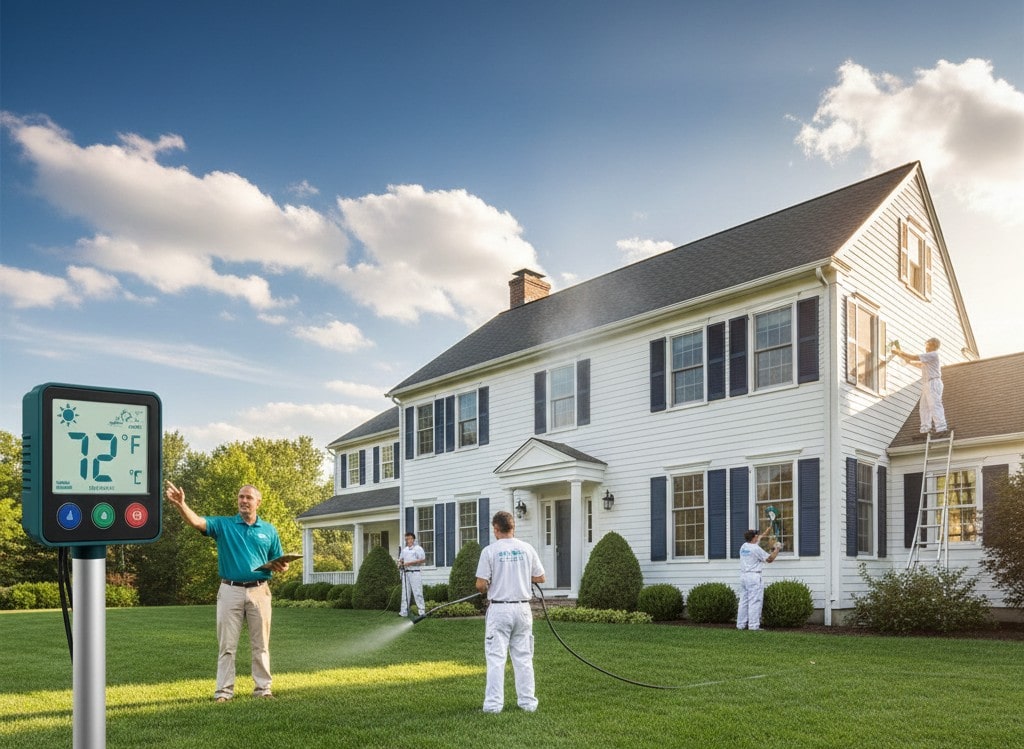
Painting at the wrong time can cost homeowners thousands in repairs and repainting. Connecticut’s unpredictable climate makes professional planning essential. Westport Professional House Painters understand local conditions, seasonal challenges, and proper preparation techniques to ensure your paint job lasts. Whether you’re updating interiors or protecting your exterior, expert guidance helps you choose the right time and avoid costly mistakes.