- May 1, 2026
- Westport House Painters
QUICK FACTS
✔ Professional prep work directly impacts durability and can extend paint life by years.
✔ Interior painting offers strong resale value and buyer appeal, according to national housing data.
✔ DIY savings shrink when you account for time, equipment, and potential rework.
✔ Exterior painting protects siding and structural materials from moisture damage.
✔ Multi-story, coastal, or repair-heavy projects strongly favor professional expertise.
WHAT’S IN THIS GUIDE
Home improvement costs have climbed steadily in recent years, and homeowners are scrutinizing every upgrade. Painting often looks like an easy way to save money. A few gallons of paint, a weekend of work, and you are done. But the numbers tell a different story.
Interior painting consistently ranks among the most cost-effective home improvements for resale and homeowner satisfaction, with many homeowners reporting high enjoyment and strong cost recovery relative to the investment.
So is professional painting worth the cost?
In many cases, yes. When done correctly, professional painting lasts longer, protects your home better, and can deliver measurable resale value. The key is understanding what you are actually paying for, and when hiring a pro makes financial sense.
What Does Professional House Painting Actually Cost?
Professional house painting costs vary based on size, condition, and location.
National industry averages show:
- Interior painting: roughly $2 to $6 per square foot
- Exterior painting: roughly $1.50 to $4 per square foot
- Full exterior repaint for an average home: $3,000 to $8,000, depending on size and prep needs
These ranges come from large home services data aggregators such as Angi and HomeAdvisor, which track thousands of project estimates across the United States.
Several factors influence price:
- Condition of existing surfaces
- Amount of prep work required
- Paint quality and brand
- Trim detail and architectural complexity
- Regional labor costs
Homes in coastal New England markets like Westport, CT, may fall toward the higher end due to labor rates and environmental exposure. The price reflects far more than applying color to a wall. It includes preparation, protection, technical skill, and project management.

What You’re Really Paying For: Beyond the Paint
The biggest misconception about professional house painting cost is that most of it goes toward materials. In reality, labor and preparation dominate the investment.
Surface Preparation
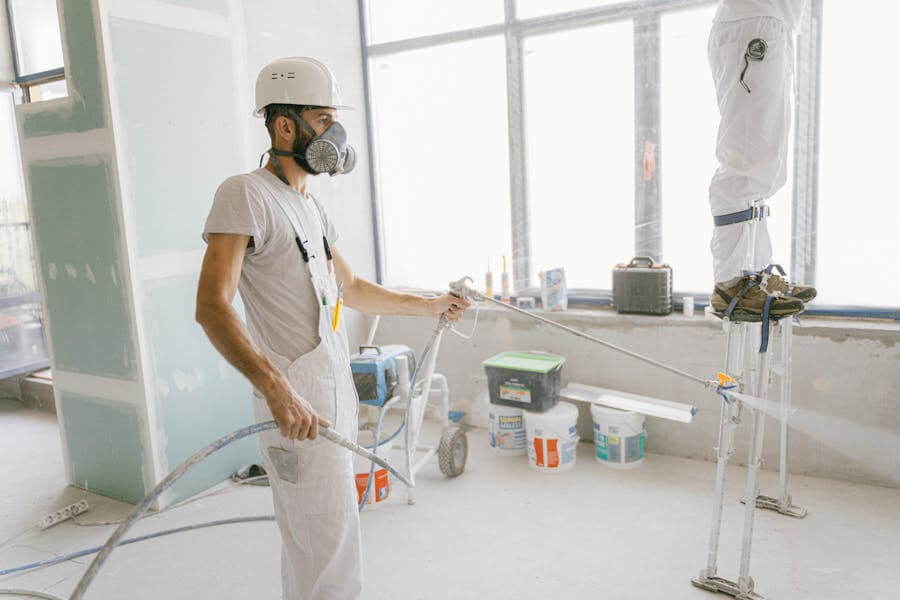
Proper prep includes scraping loose paint, sanding rough areas, patching drywall, repairing minor wood damage, sealing gaps with caulk, and applying primer where needed.
Inadequate preparation is the primary cause of early paint failure. A surface that is not properly cleaned, repaired, and primed will not hold paint long-term. This is especially important in climates with moisture, salt air, and freeze-thaw cycles.
Professional-Grade Materials
Premium paints contain higher-quality resins and pigments. Manufacturers such as Sherwin-Williams and Benjamin Moore publish product performance data showing improved washability, fade resistance, and coverage compared to economy-grade paints.
Higher quality paint often requires fewer coats and provides better long-term durability, which reduces the frequency of repainting.
Skill and Efficiency
Clean lines, even coverage, and correct application techniques require experience. Professionals understand drying times, humidity impact, and proper layering. They also complete projects faster, which minimizes disruption to daily life.
How Long Does Professional Paint Last Compared to DIY?
Longevity is where professional painting often justifies its cost.
For exterior painting, a professionally applied, properly prepped paint job typically lasts 5 to 10 years, depending on siding material and exposure. Wood siding may require more frequent maintenance than vinyl or fiber cement. Harsh sun, coastal moisture, and temperature swings shorten lifespan if prep and product selection are poor.
Interior paint in standard living areas generally lasts 5 to 7 years. High traffic areas such as hallways, kitchens, and children’s rooms may need touch-ups sooner.
DIY paint jobs often fail earlier due to insufficient prep, thin coats, or incorrect product selection. Peeling, blistering, and uneven fading are common signs of early failure. Repainting sooner than expected erodes any upfront savings.
DIY vs. Professional: A Real Cost Comparison
| Category | DIY Painting | Professional Painting |
| Upfront cost | Lower cash outlay (materials only) | Higher upfront price (labor + materials + overhead) |
| Typical cost components | Paint/primer, supplies, rentals, repairs | Prep labor, skilled application, materials, equipment, cleanup |
| Paint + materials range (typical) | ~$400–$1,500+ (can be higher for exteriors) | Included in quote (often higher-grade systems) |
| Equipment needs | May require ladder/sprayer rental and specialty tools | Crew already has pro equipment and safety gear |
| Time investment | High: often 40–60+ hours for full exterior | Low for homeowner: project completed faster |
| Quality consistency | Varies with skill; lines/coverage can be uneven | More consistent finish: clean lines, uniform coverage |
| Prep work quality | Often rushed or incomplete | Typically thorough, which improves adhesion and durability |
| Risk of mistakes | Higher: drips, lap marks, missed primer, early peeling | Lower: experienced techniques reduce rework |
| Safety risk | Higher (ladders, heights, chemicals) | Lower for homeowner; crew follows safety practices |
| Durability (exterior) | Can fail sooner if prep/application is weak | Typically 5–10 years depending on siding/climate |
| Long-term cost | Can rise if repainting is needed sooner | Often lower lifetime cost due to longer lifespan |
| Best use cases | Small, low-risk areas (single room, simple walls) | Full exteriors, multi-story homes, repair-heavy surfaces, detailed trim |

How to Decide If Professional Painting Is Worth It for You
If you are weighing DIY vs professional painting, use a structured approach.
Step 1: Evaluate the Scope
Are you painting a small bedroom or the entire exterior? High ceilings, stairwells, detailed trim, and multi-story exteriors significantly increase complexity.
Step 2: Assess Surface Condition
Look for peeling paint, cracks, wood rot, mildew, or water damage. Extensive prep needs often justify professional involvement. Homes built before 1978 may also require lead-safe practices under Environmental Protection Agency rules.
Step 3: Calculate True DIY Costs
Add materials, equipment rentals, and realistic time estimates. Include the potential cost of correcting mistakes.
Step 4: Consider Long-Term Goals
If you plan to sell, fresh neutral interior paint has been shown to improve buyer appeal. The National Association of Realtors reports that interior painting is one of the most impactful improvements for attracting buyers and recovering costs.
If you plan to stay long-term, durability and surface protection matter more than short-term savings.
When Professional Painting Is Clearly the Better Investment
Some situations strongly favor professional painters.
- Multi-story exterior homes
- Extensive scraping and surface repair
- Historic homes with detailed trim
- Tight project timelines
- Coastal exposure with high moisture and salt air
In coastal Connecticut, humidity, salt air, and freeze-thaw cycles accelerate paint breakdown. Proper surface sealing and product selection are critical to prevent premature peeling and wood damage. In these cases, expertise protects more than appearance. It protects the structure itself.
Frequently Asked Questions
Is it cheaper to paint your house yourself?
Upfront, yes. DIY painting avoids labor costs. However, once you factor in materials, equipment rentals, your time, and the risk of mistakes, the cost gap narrows. Large exterior projects often cost more in the long run if improper prep leads to early paint failure.
Why is professional painting so expensive?
Most of the cost goes toward labor and preparation, not just paint. Proper scraping, sanding, patching, priming, and safe ladder work take time and skill. According to the Painting Contractors Association, preparation is the primary factor in paint durability.
Does hiring professional painters increase home value?
Yes. The National Association of Realtors reports that interior painting is one of the highest return home improvement projects, with strong cost recovery and improved buyer appeal.
How long does a professional exterior paint job last?
Typically, 5 to 10 years, depending on siding material, climate, and paint quality. Coastal moisture, strong sun exposure, and freeze-thaw cycles can shorten the lifespan of surfaces that are not properly sealed.
When should you not DIY a paint project?
Avoid DIY when the project involves multiple stories, extensive surface damage, lead paint concerns in pre-1978 homes, or complex trim work. Safety risks and improper prep can outweigh cost savings.
Protect Your Home’s Value With the Right Painting Decision
Professional painting is not just cosmetic. It protects siding, drywall, and trim from moisture and wear. It extends the life of materials. It can improve resale value and buyer perception.
The upfront cost is higher than a weekend DIY project, but the long-term value often justifies the investment, especially for large or complex jobs.
Homeowners in Westport who want experienced workmanship and a thorough approach to preparation can consult Westport Professional House Painters to evaluate their home’s specific needs and make a decision based on durability, safety, and long-term value.