
What’s In This Guide
Quick Facts
- Inspect cracks, hollow or loose areas, stains, chalking, and prior coating failure before choosing paint.
- Fix moisture sources before coating stucco. Paint should not be used to hide active water problems.
- Efflorescence is a warning sign that moisture is moving soluble salts to the surface.
- Repairs must cure and bond properly before primer or finish coats are applied.
- Primer and finish coatings should match the stucco’s condition, porosity, repairs, and existing coating system.
What Should Be Checked Before Painting Stucco?

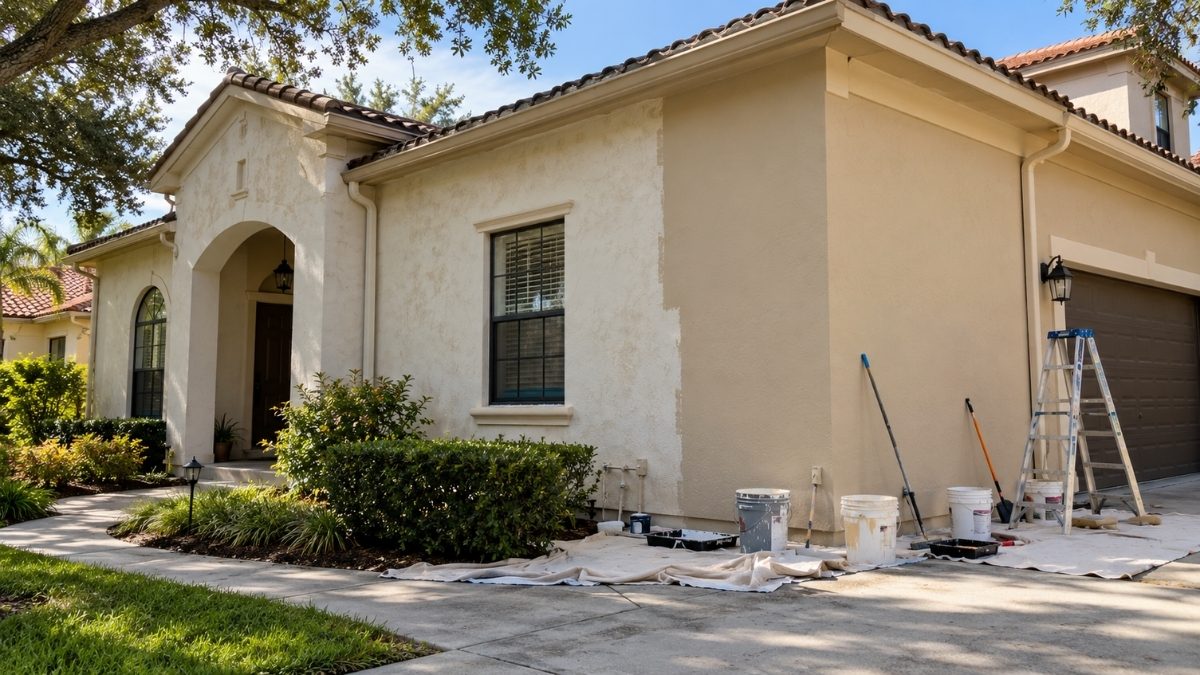
If you are searching for stucco painters near Westport, CT, the main thing to consider is whether the surface is ready for a new coat of paint.
Stucco can develop cracks, worn areas, moisture-related issues, or problems from previous coatings. These conditions can affect the final result, so the surface should be checked before painting begins.
A proper inspection can help determine whether any repairs, cleaning, priming, or other preparation may be needed before applying a new finish.
How to Evaluate Stucco Before Repainting
1. Inspect Cracks and Movement
Hairline cracks, wider cracks, recurring cracks, and cracks near windows or doors do not all mean the same thing. A painter should map where cracks occur, determine whether edges are stable, and note signs of movement or separation. Loose or hollow-sounding areas may require repair rather than paint.
Repairs should also match the surrounding surface closely enough to avoid weak edges, texture problems, or incompatible materials.
2. Look for Moisture and Efflorescence
Moisture can enter through failed flashing, roof or gutter problems, open joints, penetrations, poor drainage, or cracks. Painting before the assembly dries can trap a problem behind the new film.
The EPA’s moisture-control guidance states that porous masonry and concrete materials should be dry before coatings are applied. Efflorescence, the white or powdery salt deposit sometimes seen on masonry surfaces, also deserves investigation.
3. Test for Chalking and Weak Surface Material
Run a clean hand across the stucco. If a powdery residue transfers easily, the surface may be chalking. Dirt, loose particles, degraded coating, and friable material reduce adhesion.
Cleaning should remove contaminants without damaging the stucco texture or forcing excessive water into cracks and openings. Aggressive preparation can create additional repair work.
4. Identify Previous Coatings
Existing paint affects what can go over it. The contractor should determine whether the old coating is sound, peeling, blistering, glossy, heavily built up, or unusually impermeable.
This matters because a new coating must bond to the existing layer, not just the stucco beneath it. It also needs to accommodate the wall’s drying behavior. On masonry, overly impermeable coatings can contribute to moisture retention when water gets behind the finish.
5. Evaluate Repairs Before Priming
Fresh patches should be firm, properly bonded, and sufficiently cured for the specified primer and coating system. Repair areas can differ from older stucco in porosity and alkalinity, which may cause uneven absorption or finish appearance.
A painter should follow the repair-material and coating manufacturers’ cure and preparation requirements rather than relying on one universal waiting period.
How Primer and Coating Decisions Should Be Made
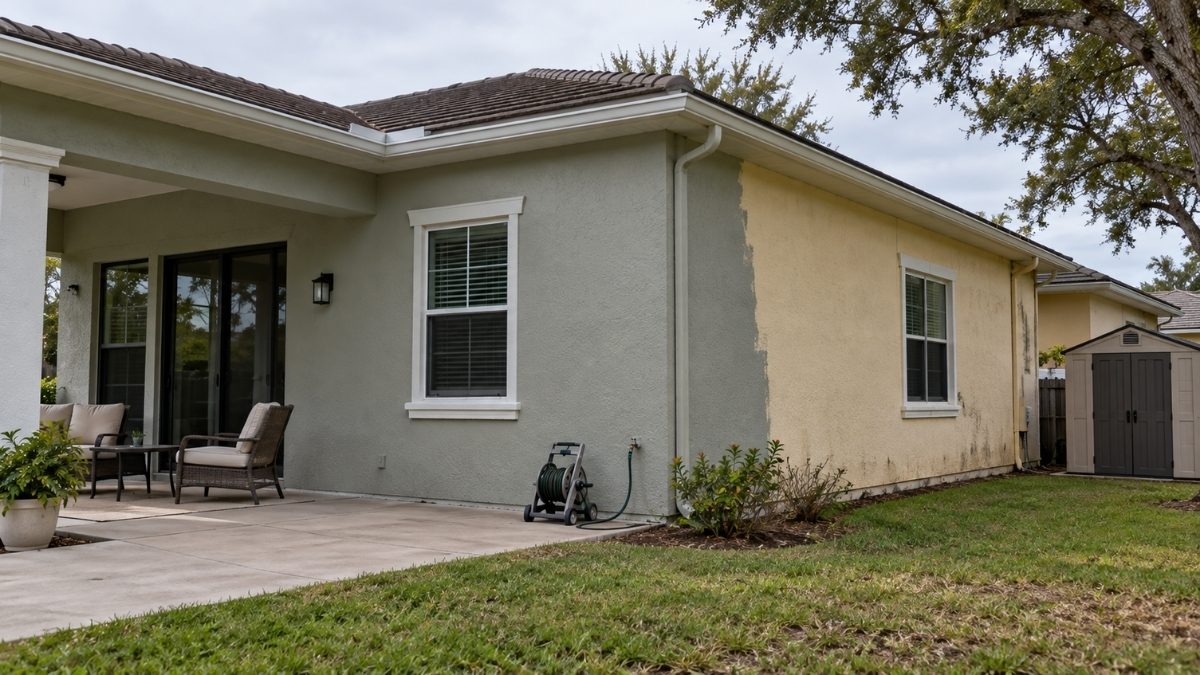
Primer selection depends on what the inspection finds. Bare porous stucco, patched areas, chalky surfaces, and previously painted walls may require different preparation or primer strategies. The correct product should be approved for the actual substrate and compatible with the chosen finish coat.
The finish coating also needs to suit exterior stucco. Factors include adhesion, vapor permeability, weather exposure, texture, existing coating condition, and the manufacturer’s application limits.
For Westport homes, this surface-specific approach matters because exterior walls face rain, humidity, seasonal temperature changes, and freeze-thaw conditions. Good exterior painting services should address the wall system first, then the appearance.
Questions to Ask Stucco Painters
When comparing exterior stucco painters nearby me, ask:
- How will you determine whether cracks need repair before painting?
- What signs of moisture or efflorescence will you investigate?
- How will you prepare chalky or previously painted stucco?
- How will you confirm that patches are ready for primer?
- What primer and coating properties are appropriate for this wall?
- How will you check compatibility with the existing coating?
Frequently Asked Questions
Will stucco painters near me in Westport, CT, protect windows, trim, and landscaping?
Protection methods vary by project, but the contractor should explain how nearby windows, trim, fixtures, walkways, and landscaping will be covered or protected before work begins.
Can stucco be repainted a completely different color?
Usually, yes. A significant color change may affect preparation, primer, and coating decisions, so the painter should account for both the existing finish and the desired final color.
Does stucco texture affect how the finished paint looks?
Yes. Texture can influence how light, color, and surface variations appear after painting. Existing patches and repairs may also remain noticeable if their texture differs from the surrounding stucco.
Should exterior fixtures be removed before stucco painting?
It depends on the fixture and project. Some items may be removed temporarily, while others can be carefully masked and protected during preparation and painting.
How often should painted stucco be inspected in Westport, CT?
Inspect it periodically and after significant weather exposure. Look for new cracks, peeling, staining, chalking, or other changes that may indicate the surface needs attention.
Discuss Your Stucco Painting Project
Westport Professional House Painters provides exterior painting services for property owners in Westport, CT. If your stucco shows cracks, chalking, efflorescence, patching, or coating failure, request an estimate to discuss the preparation and coating approach appropriate for the surface.